
A roof does not only protect against wind and weather, but also preserves the entire structure of a building. To ensure it can do this in the long term, regular roof inspections and professional roof maintenance are indispensable. Regardless of whether it is a flat roof, a pitched roof, or a green roof – the following applies throughout Germany: those who regularly inspect and maintain their roof save time, money, and trouble in the long run.
In this article, we answer the 5 most important questions about roof inspections in detail and with practical relevance – including a professional tip on using the right tools for flat roof inspections and roof testing.
1. How often should a roof inspection be carried out?
A roof inspection should be carried out at least once a year, but preferably twice a year – ideally in spring and autumn.
Why these intervals make sense:
- After winter, frost, snow, and ice can cause cracks, loose tiles, or damaged seals.
- Before winter, an inspection ensures that the roof is weather-resistant for the cold season.
- After severe storms, hail, or heavy rain, an unscheduled roof inspection should always be carried out.
Regular roof inspections help to identify minor defects in time, before they lead to costly damage. In addition, many insurance companies require proof of regular roof maintenance in order to ensure full insurance coverage in the event of damage.
Tip: A maintenance contract ensures plannable inspections and gapless documentation – a real advantage for homeowners, property managers, and, of course, roofing companies.

2. What is done during roof maintenance?
Roof maintenance is far more than just a quick glance at the roof. It is a structured, technical inspection of all major roof components – tailored to the specific roof structure (pitched roof, flat roof, green roof, or PV roof).
Typical tasks during roof maintenance:
- Visual inspection of the roof surface, connections, and seals for cracks, creases, peeling, or leaks.
- Checking penetrations such as roof windows, vents, ventilation ducts, antennas, PV systems, and pipe penetrations.
- Cleaning roof drainage: Gutters, gullies, and downpipes are cleaned to ensure free water drainage.
- Checking fasteners: Screws, brackets, and wind protection clips are checked for tightness.
- Minor repairs such as re-sealing connections or replacing damaged roof tiles.
- Documentation: Creation of a maintenance report with photos, findings, and recommendations for necessary measures.
Objective: Roof maintenance aims not only to identify but to prevent damage before major renovations become necessary.
3. Is flat roof maintenance mandatory?
Flat roof maintenance is not legally required in Germany, however, it is effectively one of the duties of the owner as part of the so-called duty to ensure public safety.
This means: Owners are obliged to have their buildings inspected regularly in order to avoid dangers to third parties. For example, if roofing materials become loose or water damage occurs, this can have expensive legal consequences – especially if regular flat roof maintenance cannot be proven.
Why the flat roof in particular is especially maintenance-intensive:
- Standing water, puddle formation, or clogged gullies place a heavy burden on the roof skin.
- UV radiation, frost, and heat cause seals to age.
- Mechanical stress from heavy loads (gravel, green roofs, PV systems) leads to additional wear and tear.
Regular flat roof inspections help to detect moisture damage and significantly extend the service life of the roofing seal.
4. Is roof maintenance mandatory?
Even though there is no legal requirement, roof maintenance is effectively considered mandatory by insurance companies and courts.
Three reasons why roof maintenance is practically mandatory:
-
Duty to ensure public safety:
Owners must ensure that their building poses no danger – a functional roof is part of this. -
Insurance coverage:
Many building and liability insurance policies require regular maintenance as a prerequisite for full coverage in the event of a claim. Anyone who fails to do so risks having their claims reduced. -
Value preservation:
A maintained roof has a longer service life, lower maintenance costs, and retains the value of the building.
Good to know: No legal obligation in the strict sense – but a duty of responsibility from the perspective of ownership and insurance. Those who ignore roof maintenance save in the short term but pay double in the long term.
5. What does roof maintenance include?
The exact points depend on the type of roof. Here you will find a clear checklist that you, as a roofing company, generally work through during every maintenance visit.
Pitched roof maintenance:
- Inspection of the roof covering (tiles, slate, roofing tiles)
- Checking the ridge, verge, eaves, and valleys
- Checking connections to dormers, chimneys, and roof windows
- Inspection of roof hooks, snow guard systems, and lightning protection
- Cleaning and inspection of gutters and downpipes
- Inspection of the underlayment or roof skin (where accessible)
Flat roof maintenance:
- Inspection of sealing membranes, seams, edges, and joints
- Checking the drainage: gullies, emergency overflows, roof drains
- Removal of leaves, moss, or overgrowth
- Inspection of railings, ventilation, and PV connection points
- Roof sampling in case of suspected moisture penetration with the Lochmaster 3000
- Documentation with photos and recommendations
A professional roof maintenance not only detects damage but also provides information about the remaining service life of the roof skin and any potential need for renovation.
Pro tip: Lochmaster 3000 – the tool for precise flat roof inspections
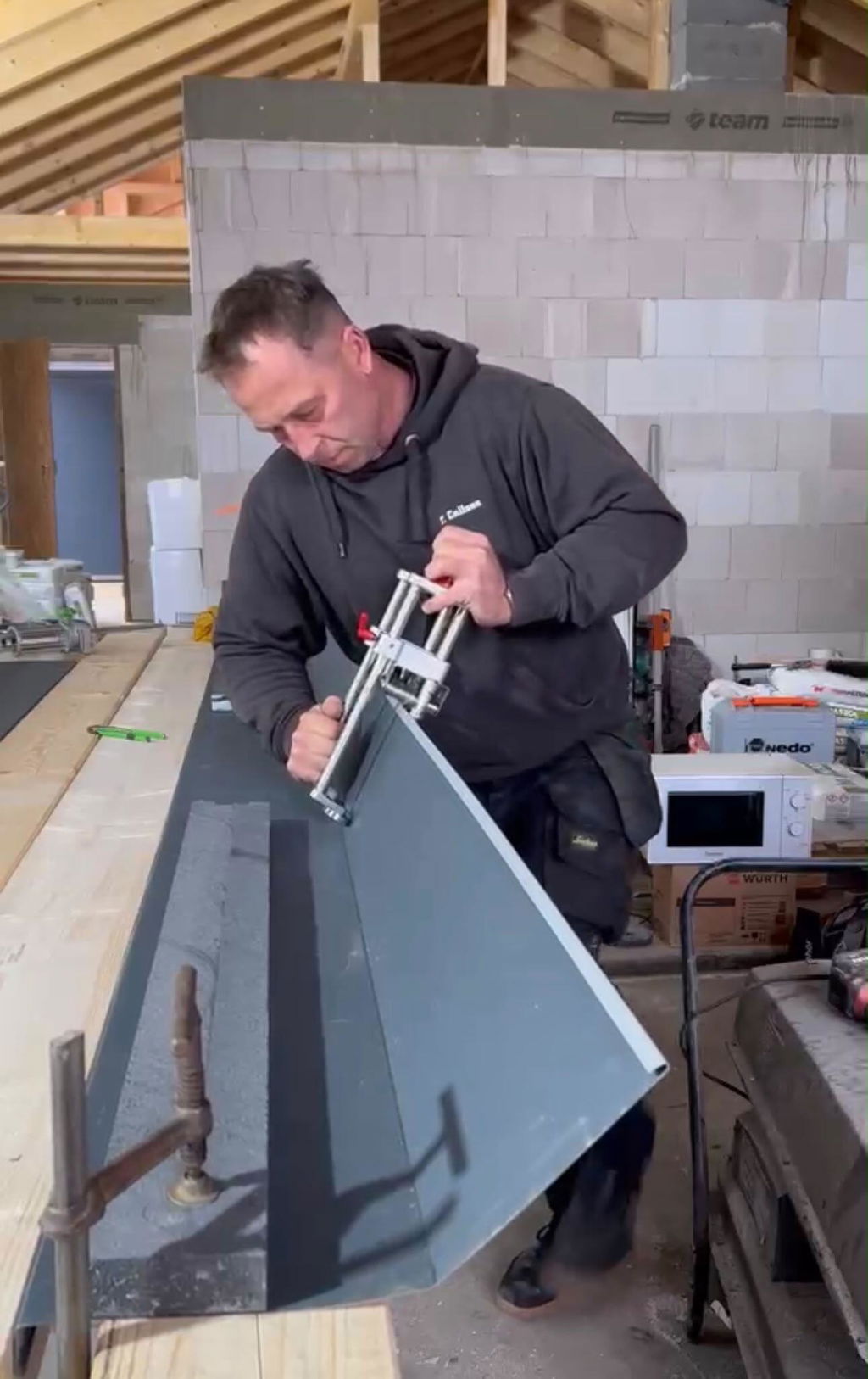
For accurate flat roof inspections and roof sampling, professionals rely on the Lochmaster 3000 – the perfect tool for every flat roof maintenance task.
The Lochmaster 3000 allows you to check seals precisely, quickly, and without damage.
It enables reliable localization of moisture, blisters, or leaks – all without complex or destructive methods.
Benefits for roofers:
- Saves time during flat roof inspections
- Provides precise measurement results
- Increases occupational safety and efficiency
This tool was developed specifically for roofers and belongs in every modern roof inspection kit.
Video: Roofers / Flat roof work part 1
Regular roof maintenance is pure investment protection
A regular roof inspection and maintenance is not a tedious chore, but the best insurance for your roof. It extends the service life, protects against water damage, and secures your insurance coverage.
Summary:
- Roof inspection: at least once a year, preferably twice (spring & autumn)
- Flat roof maintenance: particularly important due to weather exposure
- Obligation: legally indirect via traffic safety & insurance requirements
- Roof sampling: useful for moisture control
- Tool tip: Lochmaster 3000 – for precise, non-destructive flat roof checks
Benefits for roofing companies
By offering your customers regular roof inspections and maintenance contracts, you position yourself as a reliable partner for safety and value retention. With professional tools like the Lochmaster 3000, you work efficiently, precisely, and with state-of-the-art technology – exactly what modern roof care requires today.